In May 2026, two global investment managers announced plans to expand further into Abu Dhabi. Man Group, one of the world’s largest alternative asset managers with USD 228.7 billion in assets under management, plans to establish a presence in Abu Dhabi Global Market, while Capital Group, which manages USD 3.3 trillion, announced plans to open its first Middle East office there, subject to regulatory approvals.
Five years earlier, this would have seemed far less obvious. The international expansion of a European private equity or venture capital fund typically ran through Luxembourg. That is where a mature legal and regulatory framework, administrative infrastructure, European distribution and, above all, the investor trust built up over several decades were readily available.
All of this still holds true. What has changed is not Luxembourg’s importance, but the fact that another financial centre has, in the meantime, appeared on the map of global asset managers. Abu Dhabi is no longer simply a city worth visiting from time to time on a fundraising roadshow. For a growing number of international players, it is becoming a permanent operating hub.
The question, therefore, is not necessarily Luxembourg or Abu Dhabi. It is rather what role each hub can play within an international fund management platform.
Capital’s centre of gravity has shifted east
Interest in Abu Dhabi is driven primarily by the concentration of capital.
The sovereign wealth funds of the GCC countries now collectively manage roughly USD 6 trillion in assets. This represents more than 40 percent of global sovereign wealth. The region’s largest players include the Abu Dhabi Investment Authority, Mubadala, ADQ, Saudi Arabia’s Public Investment Fund and the Qatar Investment Authority.
The change, however, is visible not only in the sheer volume of available capital. These institutions are becoming increasingly active, appearing in a growing number of direct transactions and placing increasingly sophisticated demands on the managers they work with.
In 2024, for example, Mubadala deployed around USD 29 billion across 52 transactions, making it one of the world’s most active sovereign investors. Meanwhile, Middle Eastern capital is increasingly seeking investment opportunities in private equity, infrastructure, technology and other alternative asset classes.
This is precisely the market in which many European managers already have significant expertise and an established track record.
The connection therefore seems logical: the region has long-term capital, while Europe has the investment and fund management expertise that the owners of that capital may need.
The two, however, do not meet automatically.
Flying in a few times a year is no longer enough
Five to ten years ago, it was still considered a workable model for a European manager to maintain relationships with Middle Eastern investors from London, Frankfurt or Luxembourg. A few in-person meetings a year, perhaps a local adviser and a well-prepared presentation were often sufficient.
Today, more is required.
Middle Eastern institutional investors increasingly see themselves as more than simple fundraising targets. They are looking for long-term partnerships, co-investment opportunities, meaningful local presence and strategies aligned with national economic development priorities. Among sovereign wealth funds, co-investment structures and partnerships that bring technology, know-how or economic activity to the region, beyond financial returns, have become increasingly important.
This shift is also reshaping how managers operate.
A local office on its own does not, of course, guarantee capital raising. There is a big difference between a nominal presence and a genuine regional platform. Institutional investors also look at where decisions are made, who works locally, how quickly senior management can be reached, and whether there is real investment or business development capacity in the region.
ADGM’s growth is no longer just a marketing story
Abu Dhabi Global Market began operations in 2015. In little more than a decade, it has become one of the fastest-growing international financial centres in the region.
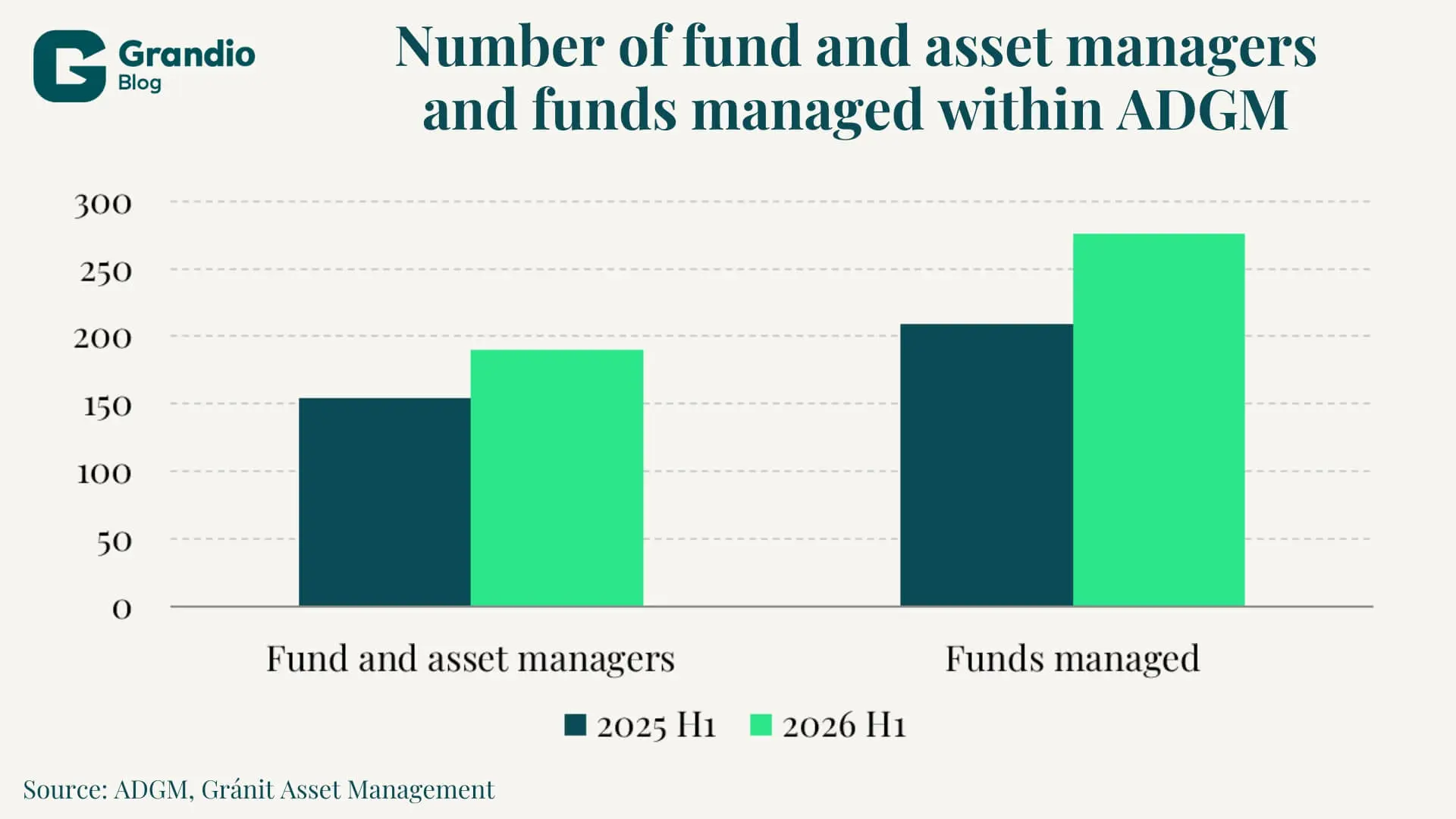
In 2025, assets under management in ADGM grew by 36 percent. By year-end, 171 fund and asset managers were operating in the financial centre, managing a total of 244 funds. There were 12,671 active licences, while the number of people employed within ADGM rose by 51 percent to 44,339.
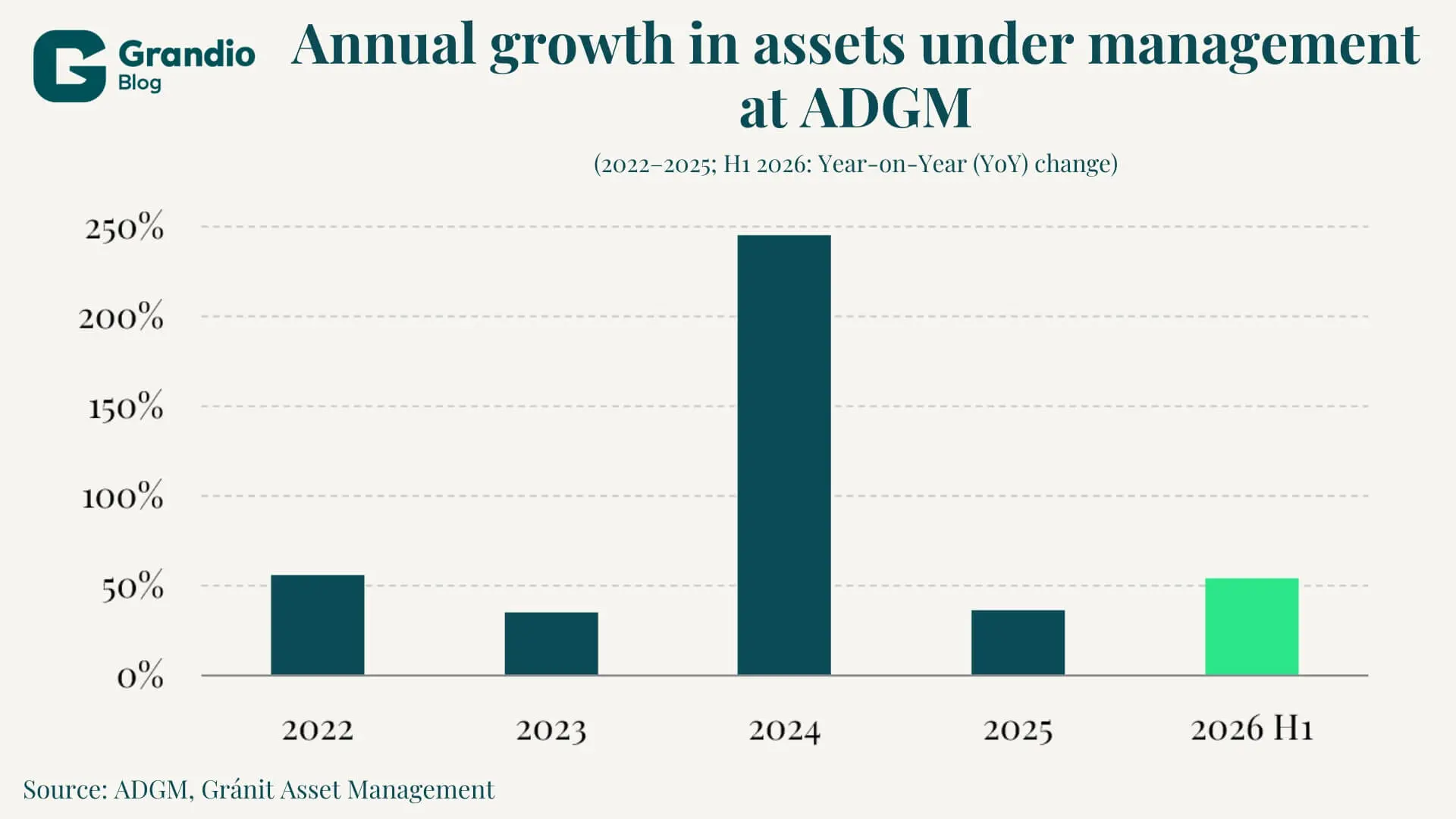
The momentum continued into the first half of 2026: assets under management in ADGM rose by 54 percent year on year. The number of fund and asset managers reached 190, overseeing 276 funds, while the number of active licences reached 13,974.
It is important, however, to keep the orders of magnitude in mind, as the impressive growth rates start from a relatively low base. Luxembourg’s fund industry managed around EUR 8.3 trillion in assets at the end of 2025. ADGM, by contrast, has mainly published growth rates rather than a current absolute figure for its own assets under management, so the two hubs’ total AUM cannot be compared precisely on the basis of these releases. The difference in institutional scale is nonetheless apparent: at the end of 2025, Luxembourg had 3,036 undertakings for collective investment, including 2,034 umbrella structures with 12,317 sub-funds; together with 1,002 stand-alone UCIs, there were 13,319 fund units in total.
ADGM is therefore growing very fast, but it remains a much younger and less mature market than Luxembourg. The two hubs are not in the same weight class today, and Luxembourg will remain the dominant player in terms of scale for the foreseeable future. The question is therefore not when ADGM will “overtake” Luxembourg, but what role it carves out for itself within a global platform.
More important than the numbers, however, is who is arriving.
BlackRock, Nuveen and Bain Capital have all chosen ADGM. The more asset managers, banks, law firms and advisers there are in one place, the easier it becomes for the next entrants to build a functioning local platform.
Growth thus gradually becomes self-reinforcing.
Not just asset managers: an entire value chain is being built
Proximity to capital attracts more than just asset managers. A complete capital markets value chain is gradually forming around ADGM. Over recent years, several global investment banks have established or deepened their presence in Abu Dhabi. Morgan Stanley opened its office in 2024 and in 2026 became the first international investment bank to join the Abu Dhabi Securities Exchange as a remote trading member, providing clients with direct market access. JPMorgan received a Category 1 banking licence in 2024 and went commercially live in ADGM as a booking location for payments and corporate banking clients in 2025. Goldman Sachs has held an ADGM financial services permission since 2023.
Behind them, the full service chain is lining up: private banks (UBS, Julius Baer, BBVA), international law firms (Skadden, DLA Piper), capital markets and platform providers (Carta, Cantor Fitzgerald), and digital asset players. At the end of 2025, Binance became the first to receive a global crypto exchange licence from ADGM’s regulator (FSRA), and Circle, Galaxy Digital and Bitcoin Suisse have also set up there.
The value chain also carries strong London DNA. ADGM is built directly on English common law and recruits its judges from the highest levels of leading common law jurisdictions – Lord Hope, formerly of the UK Supreme Court, for example, has sat on its Court of Appeal – while its regulator, the FSRA, has openly drawn on international regulatory models, including those of the UK’s FCA. The region is thus “importing” not only capital but also the institutional and legal infrastructure of developed markets.
Why does Luxembourg remain indispensable?
Given the momentum around Abu Dhabi, it would be easy to conclude that Luxembourg is gradually losing its former role. The numbers, however, do not support this.
Luxembourg remains the largest investment fund centre in Europe and the second largest globally after the United States. In 2025, the country’s fund industry managed around EUR 8.3 trillion in assets, and Luxembourg funds are available in more than seventy countries.
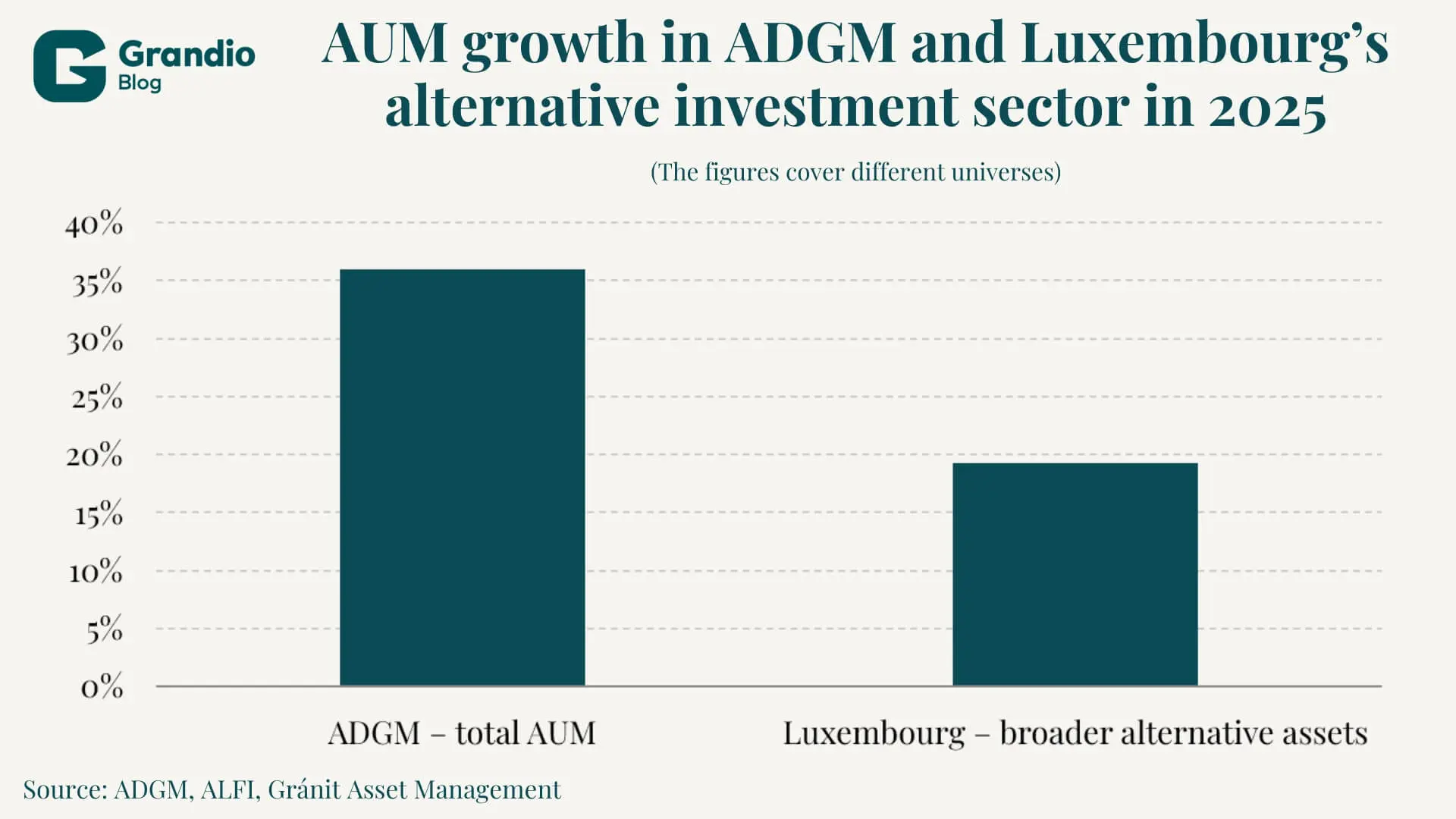
Luxembourg is particularly hard to bypass in cross-border distribution. In 2025, global cross-border fund assets reached EUR 8.5 trillion, with Luxembourg accounting for 42 percent of global cross-border public-market assets, including UCITS and ETFs.
Luxembourg’s greatest advantage lies not in any single tax or legal provision, but in the ecosystem as a whole.
Managers can choose between RAIF, SIF, SICAR and other fund structures. Fund administration, depositary services, audit, legal and tax advice, and expertise in the EU regulatory framework are all available locally. All of this is underpinned by decades of market practice and international investor acceptance.
Through the EU AIFM regime, Luxembourg offers a level of European market access and distribution that a Middle Eastern financial centre cannot replicate on its own.
What does Abu Dhabi offer differently?
Abu Dhabi is not competing with Luxembourg by trying to replicate every function of the European fund hub.
Its most important advantage is proximity to capital.
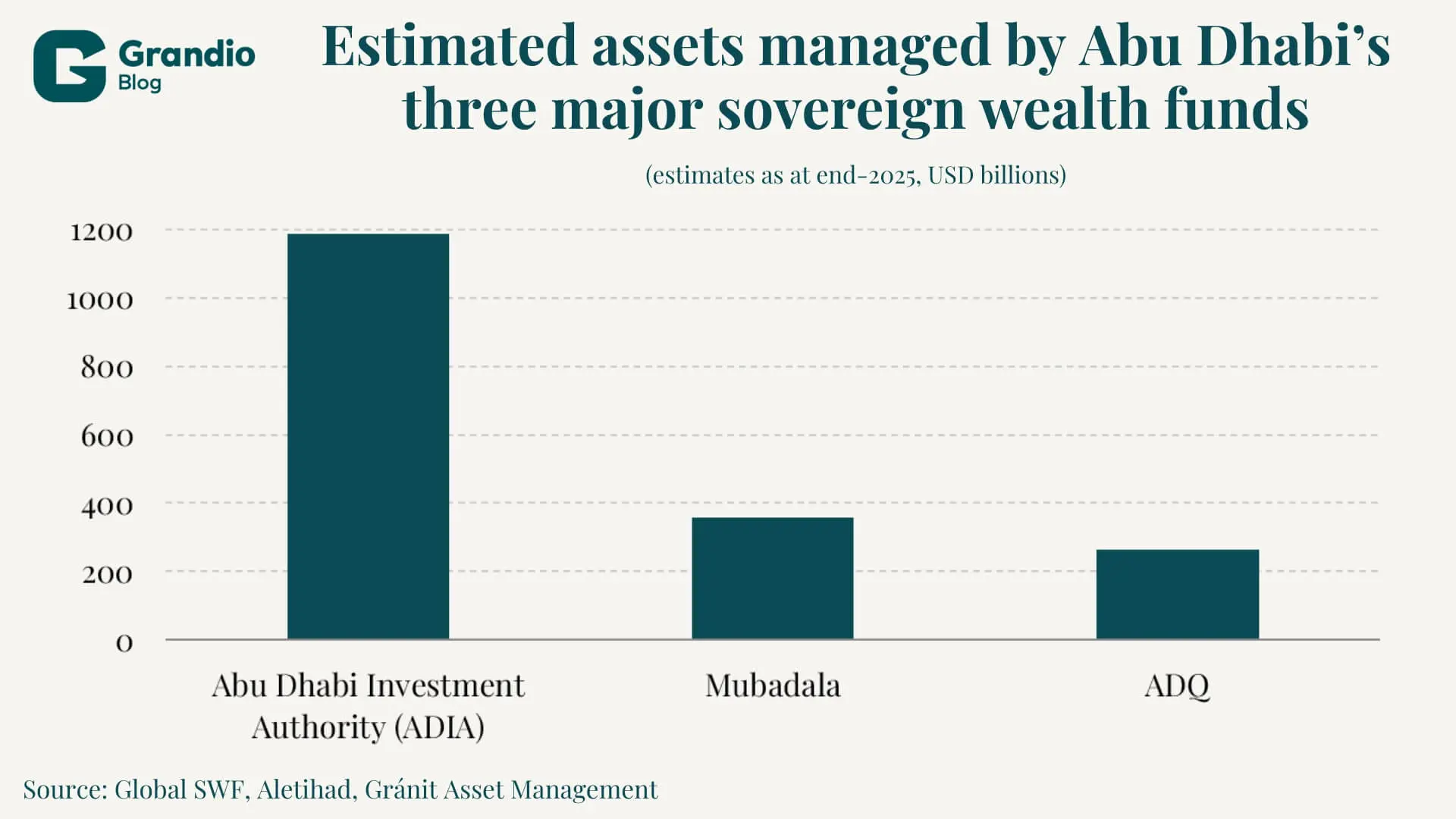
Abu Dhabi institutions that rank among the world’s largest sovereign investors are located in the immediate vicinity of Al Maryah Island, home to ADGM. This does not, of course, mean that a local office automatically provides access to them. It does, however, mean that relationship building, regular meetings and a long-term institutional presence become physically easier. According to Global SWF estimates for the end of 2025, the Abu Dhabi Investment Authority, Mubadala and ADQ together managed approximately USD 1.8 trillion.
Another important advantage of ADGM is a legal environment familiar to international investors. Its legal system is based directly on the application of English common law, with its own court system and proceedings conducted in English.
The tax environment can also be favourable, but it should not be reduced to the frequently cited “zero percent tax” claim. Qualifying companies operating in ADGM that meet the relevant conditions can indeed apply a 0 percent corporate tax rate to their qualifying income, but different rules may apply to other income and to structures that do not meet the requirements.
Abu Dhabi’s competitive advantage is therefore not simply about tax. It is rather the combination of capital, regulatory flexibility, local networks and a rapidly developing financial ecosystem.
How have investor preferences changed?
Four clear shifts have taken place over the past five years.
- Investors expect more than a mere promise of returns. Risk management, operational stability, transparent valuation and regular, detailed reporting have become more important. The private markets sector has matured, and LPs are increasingly rigorous in distinguishing managers that can create genuine operational value from those that have relied primarily on favourable market conditions.
- Local presence has gained in value. Investors want to know whether a manager genuinely understands the region’s economic and institutional environment, or merely wants to raise capital there.
- Co-investment opportunities and strategic partnerships are becoming increasingly important. In many cases, large institutional investors want more than just units in a fund; they are looking for more direct visibility, greater control and a more favourable cost structure.
- Investors are thinking less in terms of a single hub and more in terms of platforms that connect multiple regions. A Luxembourg domicile, an Abu Dhabi fundraising and relationship hub, and an investment team in London or elsewhere in Europe are not necessarily duplication. Increasingly, they are parts of the same international operating model.
Geopolitical risk cannot be ignored either
Part of the story of Abu Dhabi’s development is that the Middle East remains a geopolitically riskier region than Europe. The Iran conflict that escalated in 2026 directly affected the economies of the Middle East, caused disruption to transport and energy markets, and put significant temporary pressure on regional equity markets. Some GCC countries also reviewed what share of their sovereign wealth they deploy in international investments versus domestic economic stabilisation.
The longer-term trend in fund management, however, has not stalled. New entrants continued to join ADGM during the conflict, and assets under management in ADGM grew by 54 percent year on year in the first half of 2026.
The latest data paint an interesting picture: Middle Eastern sovereign funds still set a record in the first half of 2026, deploying USD 53.9 billion across 108 transactions, led by Mubadala (USD 15.2 billion), and participating in half of all global mega-deals above USD 1 billion. However, these figures largely reflect investment processes initiated before the full economic impact of the conflict emerged; major capital deployments have lead times measured in months. By the autumn, the outlook had deteriorated significantly: according to the World Bank’s 6 October 2026 forecast, GCC economies are projected to contract by an average of 4.3 percent in 2026, primarily because of disruptions to energy exports and government revenue. The economic impact of the conflict is therefore already evident in the evolving economic situation and the latest forecasts. In parallel, Saudi Arabia’s PIF has reduced its planned international investment allocation from 30 to 20 percent in its 2026–2030 strategy. This is also a longer-term strategic shift reflecting greater emphasis on domestic economic development priorities and should not be attributed solely to the conflict.
The lesson is not that geopolitical risk is insignificant. Quite the opposite: it reinforces the importance of an international asset manager not building its entire operation on a single jurisdiction or investor region. In this sense, a presence in both Luxembourg and Abu Dhabi can be not only a market-building decision but also a diversification decision.
What does all this mean for a Hungarian asset manager or investor?
From a Hungarian perspective, the question is not whether domestic fund structures should always be moved abroad.
For a fund that primarily targets Hungarian investors and makes domestic investments, a Hungarian structure often remains an appropriate and cost-effective solution. Setting up an international structure purely for the sake of prestige does not usually create a genuine competitive advantage.
The situation is different if the manager wants to reach European institutional investors, raise capital in several countries, or work with international partners for whom a Luxembourg structure is familiar and readily acceptable. In such cases, Luxembourg can offer an advantage through investor trust and European distribution.
Abu Dhabi becomes truly relevant when the goal is to engage institutional investors, family offices or sovereign players in the GCC region over the long term. This, however, requires more than setting up a local company. It requires a local team, a consistent presence, appropriate governance and an investment proposition that makes sense from the region’s perspective.
In many cases, therefore, the strongest model is not a choice between the two hubs.
A Luxembourg platform can provide the European structure and distribution backbone, while a presence in Abu Dhabi can support relationships with Middle Eastern investors, fundraising and, over time, even regional investment activity.
Not instead of Luxembourg, but alongside it
Luxembourg remains one of the most important centres for European fund structures, cross-border distribution and internationally accepted domiciles. Abu Dhabi, by contrast, offers proximity to Middle Eastern capital, regional relationships and a rapidly growing alternative fund management ecosystem.
The two hubs solve different problems.
The most important change of the past five years is therefore not that managers are choosing Abu Dhabi over Luxembourg. It is that a growing number of players no longer believe the entire international investor market can be reached effectively from a single financial centre.
The former single-hub model of global fund management is gradually evolving into a multi-hub system.
In this system, Luxembourg and Abu Dhabi are not necessarily competitors; increasingly, they complement each other
Legal Disclaimer
This document has been prepared by Gránit Alapkezelő Zrt. (registered office: 1134 Budapest, Váci út 17; company registration number: 01-10-046307) for marketing and informational purposes. Accordingly, it has not been produced in accordance with legal requirements designed to promote the independence of investment research. Nor is it subject to any prohibition on dealing ahead of the dissemination of investment research. This document does not constitute investment research or investment advice. Any data presented refers to past performance, and past performance is not a reliable indicator of future results. Each investor must make investment decisions at their own discretion and responsibility.